
Guide
CECB in Geneva: understanding the cantonal energy certificate for buildings
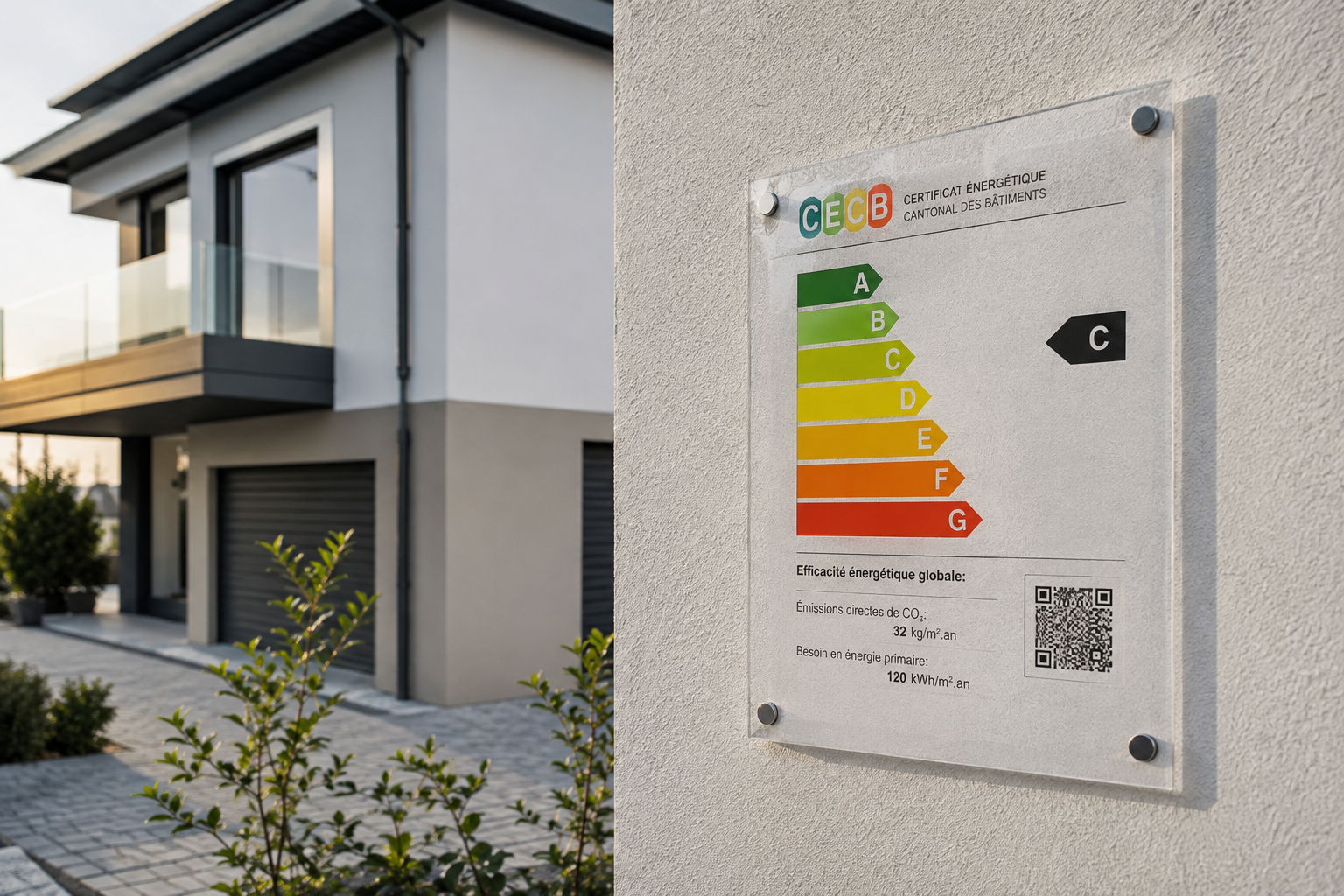
The cantonal energy certificate for buildings, better known by its abbreviation CECB, is an official document that assesses the energy performance of a property in Switzerland. It rates buildings from A to G according to three key criteria: the building envelope, overall energy efficiency and direct CO₂ emissions. In Geneva, the CECB is not systematically compulsory for a sale, but it quickly becomes a practical lever for preparing a renovation, obtaining subsidies, comparing a standard CECB with a CECB Plus or positioning an upmarket property on a…
Introduction: CECB, prestige property and Geneva specifics
The Swiss regulatory context is pushing in this direction: the Energy Act sets ambitious targets for reducing CO₂ emissions by 2030–2050, and the Buildings Programme strongly encourages thermal renovation work. For an owner, seller, buyer or investor active in prestige residential property in Geneva and its region, ignoring these developments means exposure to a gradual loss in value, less predictable returns and missed opportunities to add value.
Millenium Properties, a luxury estate agency based in Geneva, assists sellers, buyers and investors on all of these questions. Our expertise covers sales and lettings as well as reading the CECB, Geneva regulations, available grants and technical advice on energy performance, in order to maximise the asset potential of each property.
CECB: definition, content and practical use for owners
The CECB is a standardised 4-page document that sets out the energy balance of a building. It is based on three main indicators: envelope efficiency, overall energy balance and direct CO₂ emissions. The CECB rates buildings from A (very good) to G (poor), making it possible to compare the energy consumption of different properties on the same basis.
It includes the technical characteristics of the building (year of construction, energy reference area, type of heating, insulation, glazing), standardised heat requirements, the type of energy used and general optimisation remarks. The CECB also provides information on energy renovation needs and helps identify a building’s weak points in order to target cost-effective renovations.
The CECB must be drawn up by a certified expert listed on an official national register managed under the authority of the Conference of Cantonal Energy Directors. A basic CECB costs between CHF 500 and CHF 900, depending on the size and complexity of the property. The CECB is valid for ten years and must be updated if the building envelope or heating system is significantly modified. For public buildings, it must be drawn up every 10 years.
In the cantons of Vaud, Fribourg and Jura, the CECB is required for the sale of a property. A detached house rated C is negotiated differently from an older building rated F or G, the latter being seen as a genuine “energy sieve” whose heating costs weigh heavily in the purchase decision.
The three pillars of the CECB: from the building envelope to CO₂ emissions
The CECB is based on an assessment on three separate scales. It relies on standardised use of the dwelling (set temperatures, occupancy, ventilation) to allow comparison between buildings of different categories and uses. The results of this assessment feed directly into the proposed improvement measures.
Building envelope efficiency
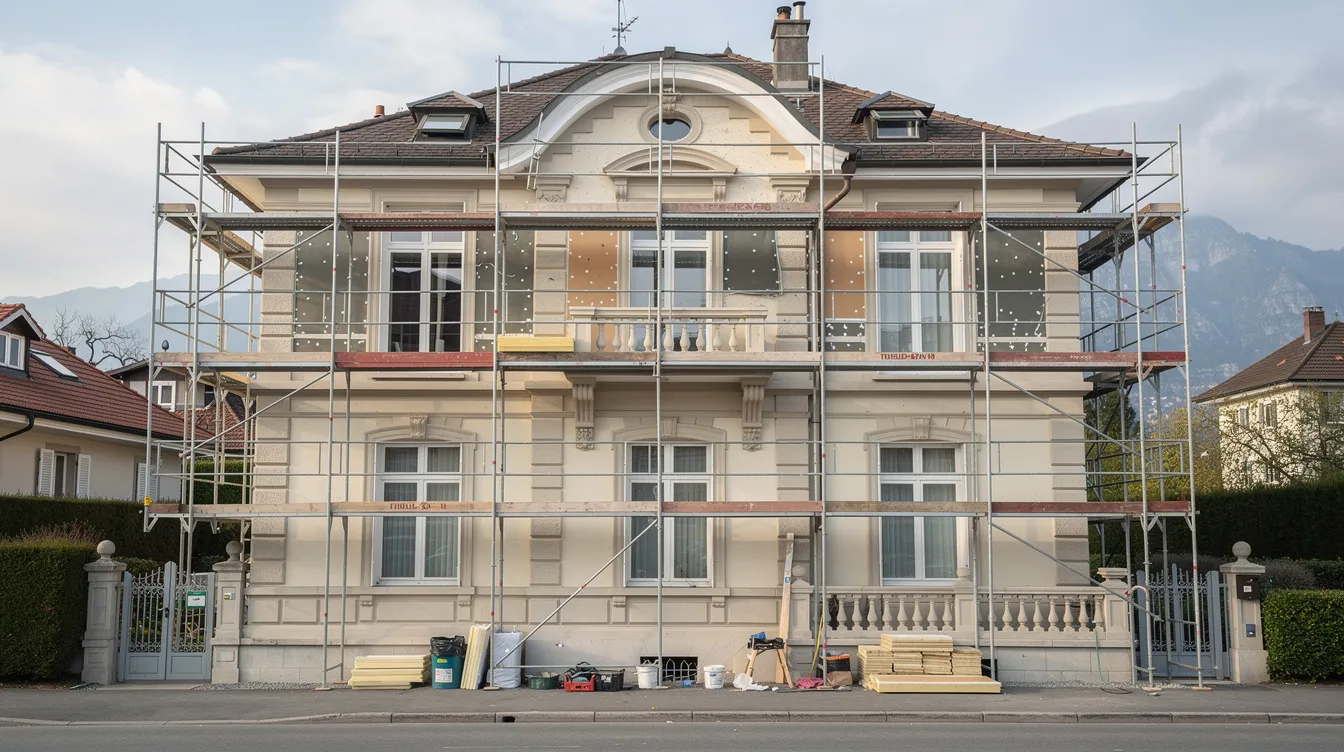
The building envelope refers to all the surfaces separating the heated volume from the outside: façades, roof, floors above unheated spaces, windows and external doors. Envelope efficiency assesses the condition of the building’s insulation through U-values (thermal transmittance), thermal bridges (balconies, wall-roof junctions) and the building’s compactness. The CECB assessment criteria also include the quality of thermal insulation as a decisive factor in the envelope rating.
A 1970s villa without façade insulation typically ends up in class E or F, while a new flat under PPE (condominium ownership) with triple glazing and reinforced insulation can reach class A or B. For a prestige property, an efficient envelope ensures there are no cold walls, reduces draughts and enhances indoor comfort, a criterion on which upmarket buyers do not compromise.
Overall energy efficiency of the building
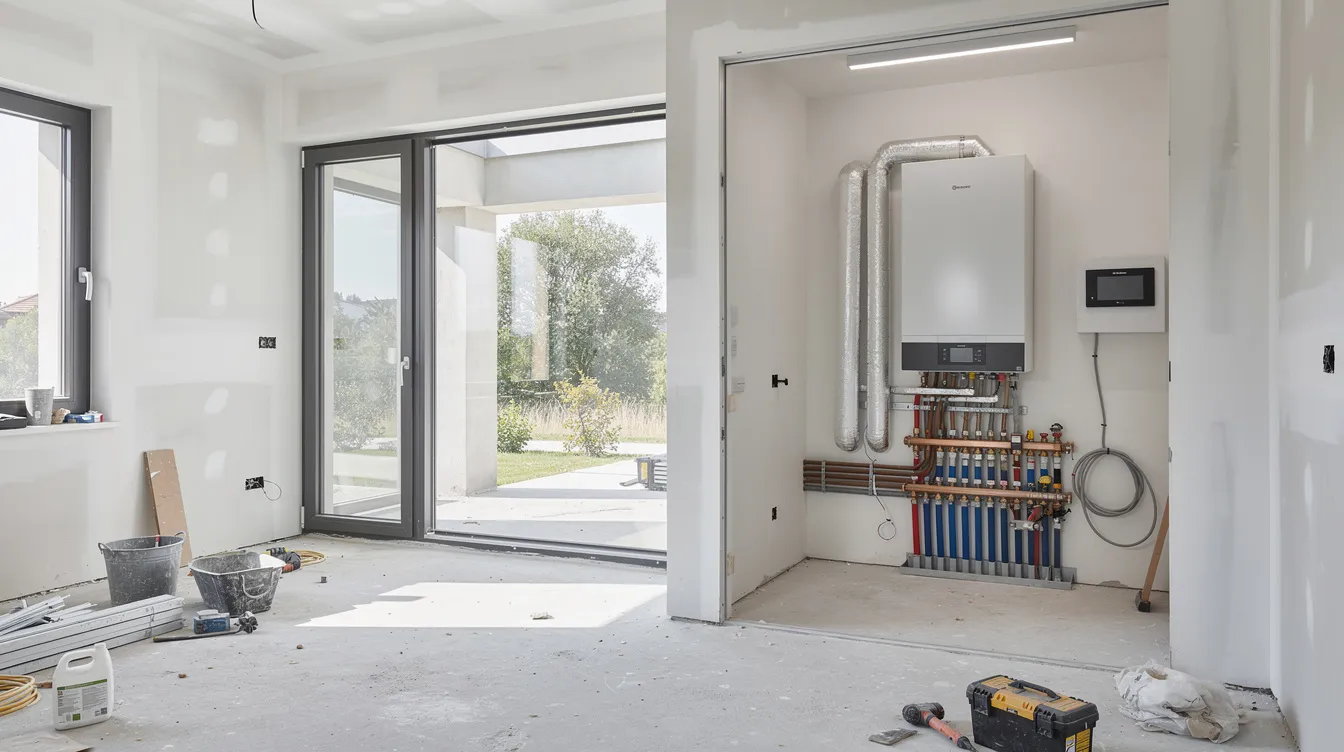
Overall energy efficiency combines heating requirements, the quality of heat generation (gas or oil boiler, heat pump, district heating network), consumption for domestic hot water and the electricity needs of the installations. The overall energy balance thus measures the total amount of energy the building requires, from all sources.
A building may have an average envelope (class C) while benefiting from excellent technical systems, such as an air-to-water heat pump, controlled ventilation or solar panels, which significantly improve its overall rating. Conversely, a 1960s building heated by oil often ends up in class F or G on this scale. Greater efficiency translates in practice into controlled running costs, a key argument for any investor calculating yield.
Direct CO₂ emissions and climate impact
Since 2023, the CECB has highlighted a third dimension: direct CO₂ emissions from heat and domestic hot water production, rated in steps of 5 kg/(m²a). CECB class A indicates zero CO₂ emissions, corresponding to the exclusive use of renewable energy.
The use of fossil fuels (oil, gas) heavily penalises the emissions rating, while a heat pump powered by green electricity, wood or a connection to a renewable network makes it possible to reach the best categories. For owners aligning their assets with an ESG strategy, whether institutional investors, wealthy families or sustainability-minded expatriates, low emissions are a powerful point of differentiation.
Standard CECB vs CECB Plus: diagnosis or renovation strategy?
The fundamental difference is this: the simple CECB is a diagnosis, an inventory of the current situation. The CECB Plus includes a personalised advisory report on energy renovations. This report generally proposes 2 to 5 renovation options, in stages or as a whole, with estimated investment costs, expected energy savings, emission reductions and payback periods.
In French-speaking Switzerland, a basic CECB costs between CHF 500 and CHF 900. The more comprehensive CECB Plus generally costs CHF 1’400 to 2’100 for a detached house, an amount often partly covered by cantonal subsidies. The CECB Plus is required for any subsidy above CHF 10’000, a frequent requirement for complete envelope renovations or the replacement of fossil-fuel heating.
In Geneva, an owner will consider a CECB Plus in several cases: a major renovation project on a villa from the 1950s–1980s, a rental building to be repositioned on the upmarket segment, or a wish to drastically reduce the IDC. The document then becomes a genuine specification for carrying out the work.
Regulations and Geneva specifics: CECB, IDC and subsidies
Unlike the cantons of Vaud, Fribourg and Jura, the canton of Geneva does not require the CECB for the sale or construction of a building. The cantonal Energy Act, revised since 2010, favours another indicator: the heat expenditure index (IDC). This obligation applies to all residential buildings supplied by a single heating plant with at least 5 heat consumers. The regulatory threshold is set at 125 kWh/m².year; above it, optimisation measures become compulsory. Around 60% of the canton’s buildings exceed this threshold.
The canton provides an online IDC form to be sent to the Office cantonal de l’énergie, with the option of appointing an expert to carry out the calculation. The CECB may be needed to obtain subsidies for energy renovation work: façade insulation, replacement of a fossil-fuel boiler, connection to a district heating network. Subsidies must be applied for before work begins, and they are available for buildings constructed before 2000.
A practical example: a villa in Cologny planning roof insulation, window replacement and the installation of a heat pump will benefit from a CECB Plus to optimise the renovation strategy, access cantonal grants of up to CHF 60 to 390/m² of energy reference area depending on the extent of the class improvement, and validate payment of the subsidies after post-works inspection.
Subsidies, profitability and asset value of a good CECB
The federal Buildings Programme, supplemented by Geneva cantonal grants, offers considerable financial leverage. The CECB and the CECB Plus have become key supporting documents for subsidies covering both the envelope (insulation, windows) and technical installations (heating, ventilation, hot water). In Geneva, grants range from CHF 60 to 390/m² of energy reference area depending on the extent of the class improvement.
The leverage is threefold: direct subsidies, annual energy savings and tax deductibility of renovation work from taxable income. Take the example of a 250 m² villa moving from class F to class C after full insulation and replacement of the heating. Costs can reach CHF 200’000 to 300’000, but cantonal grants, combined with a reduction in running costs of several thousand CHF a year, significantly shorten the payback period.
For luxury residential property, improving the CECB rating makes the property more attractive to demanding buyers, reduces the risk of a loss in value in the medium term and ensures consistency between an upmarket image and environmental responsibility, a value potential increasingly recognised by the Geneva market.
How Millenium Properties supports its clients with the CECB
At Millenium Properties, we integrate the energy dimension into every stage of our marketing strategy. For a seller, we analyse the existing energy certificate, identify the improvements that will maximise the sale price, and refer them to approved CECB experts to draw up or update the document.
For buyers and investors, we carry out a critical analysis of the CECB of the target property: identifying weaknesses (envelope, technical systems, emissions), estimating the cost of the necessary work and incorporating it into the yield calculation. We also coordinate with architects and engineers on renovation projects, and support our clients in preparing subsidy applications, from the supporting documents to post-works follow-up.
Our digital tools, virtual tours, digital inventories and electronic signatures, complement rigorous technical documentation that systematically includes CECB data. A property with a good cantonal energy certificate gains a strong point of differentiation on the Geneva luxury market.
Frequently asked questions
What we are asked most often
How do I obtain a CECB certificate for a residential building?
To obtain a CECB, you need to appoint a certified expert listed on the official national register managed by the Conference of Cantonal Energy Directors, available at cecb.ch. The expert visits the building to assess the envelope, the heating system and the technical characteristics, then issues the document within two to four weeks. A basic CECB costs between CHF 500 and CHF 900 depending on the size and complexity of the property, and remains valid for ten years. For a renovation project, it is advisable to request a CECB Plus directly, which includes an advisory report with several costed works options. Millenium Properties refers its clients to approved CECB experts in French-speaking Switzerland and assists them with all the steps involved in obtaining the document.
What services do CECB experts offer to improve energy efficiency?
CECB experts offer a full diagnosis of a building’s energy performance, covering the envelope, overall energy efficiency and CO₂ emissions. With the CECB Plus, they also provide a personalised advisory report that identifies the building’s weaknesses and proposes several renovation options, each with an estimate of investment costs, expected energy savings and payback period. This report serves as a basis for prioritising work, preparing subsidy applications and planning the improvement of the property’s energy rating.
Where can I find a CECB specialist near me in French-speaking Switzerland?
The official directory of certified CECB experts is available on cecb.ch, with a search by canton or region. In French-speaking Switzerland, experts are based in Geneva, Lausanne, Fribourg, Neuchâtel and Valais. Millenium Properties, based in Geneva, works with a network of partner CECB experts and can put its clients in direct contact with a specialist suited to their project, whether a sale, a purchase or an energy renovation.
What are the benefits of a CECB report when selling a house?
A CECB report reassures the buyer about the property’s actual energy condition and helps justify the sale price with objective data rather than a mere visual impression. A well-rated house (A to C) achieves better value on the market and is easier to negotiate than a property rated F or G, seen as an energy sieve with high heating costs. The CECB also helps anticipate buyers’ questions about future renovation work and its cost, which speeds up decision-making. Finally, in the cantons of Vaud, Fribourg and Jura, the CECB is compulsory for a sale: having it to hand avoids any delay in the transaction.