Guide
Swiss property market 2026: trends, risks and opportunities in French-speaking Switzerland
The Swiss property market is entering a phase of maturity in which prices are rising, supply is becoming scarcer and buyers must adapt to new financing conditions. Here is our full analysis to help you make the right decisions in 2026.

Summary of the Swiss property market in 2026
In 2026, Swiss real estate confirms its structural resilience. The property market remains driven by sustained demand, a historically low vacancy rate and steadily rising prices, despite an uncertain global economic environment.
Key figures:
- Property prices rose by 3.5% year on year in 2026
- Mortgage lending volume grew by 3.3% in 2026
- Asking rents rose by 2.2% in 2026, while rents on existing leases increased by only 1.2%
- Vacancy rates remain extremely low in urban centres
The Swiss rental market remains particularly tight. In major cities such as Geneva, Lausanne and Zurich, purchase prices per m² regularly exceed CHF 10 000, and rents on new leases are soaring in the face of a chronic housing shortage.
At Millenium Properties, we help our clients turn these figures into concrete decisions for their purchase, sale or investment projects in Geneva.
Recent trends in Swiss property prices
Property prices between 2024 and mid-2026 have followed a measured upward trajectory. The IMPI (Swiss residential property price index), published by the FSO, is the benchmark for analysis. It comprises an overall index as well as separate sub-indices for single-family houses and apartments held as PPE, that is, condominium ownership, with series available since 2017.
In the first quarter of 2026, prices of owner-occupied homes rose by 1.5% compared with the previous quarter. Urban areas recorded a 3.1% increase in owner-occupied home prices. Year on year, ownership prices rose by around 3.5%.
The trend differs by property type:
- Single-family house prices rose by 3.5% in 2026
- Condominium apartment prices rose by 3.7% in 2026
- For reference, PPE apartment prices had already risen by 4.2% in 2024
The Swiss property market is marked by strong resilience. Swiss real estate is regarded as a stable safe haven, which explains why price growth remains above inflation, especially in high-pressure regions such as the Lake Geneva area and north-west of Zurich.
Single-family houses and condominium (PPE) apartments: price and rent levels
In direct comparison, the two main types of residential property show distinct profiles in terms of sale prices and rents.
The vacancy rate for single-family houses is 0.7% in Switzerland, a historically low level. Single-family houses are a common property type, with median sale prices of around CHF 7 710/m² across French-speaking Switzerland, but exceeding CHF 14 000–17 000/m² in the cantons of Zurich, Geneva and Zug for high-end properties.
PPE apartments share common areas and have a median price of around CHF 8 315/m² in French-speaking Switzerland. The usual range is from CHF 430 000 to more than CHF 1.7 million depending on location.
| Sale price (median) | Monthly rent (median) | |
|---|---|---|
| Single-family house | CHF 1 200 000 – 1 300 000 | CHF 5 000 – 6 000 |
| PPE apartment | CHF 850 000 – 950 000 | CHF 3 000 – 4 900 |
Asking rents rose by 1.5% in the second quarter of 2026, while the index of rents on existing leases fell by 0.4% in 2026. Office rents rose by 1.6% on the Swiss average in 2026. Among other properties, chalets are typical of the Swiss mountains, an income property must have at least two dwellings, land can be used for private or commercial purposes, and a garage or parking space is particularly sought after in urban areas.
The role of interest rates and mortgage rates
Mortgage rates are directly influenced by the Swiss National Bank's policy rate, held at 0% since mid-2025. This low-rate policy mainly affects SARON mortgages, which are indexed to the short-term money market. Fixed rates depend more on the capital market and currently range from 1.10% to 1.70% depending on the lender and borrower profile — with 5-year fixed rates around 1.33% and 10-year rates around 1.76%. These rates have risen by around ten basis points in recent months, owing to higher capital market rates rather than a change of course by the SNB.
The stability of the Swiss franc also continues to weigh on these rates, as do international geopolitical tensions. Overall, this rate level remains attractive and continues to support demand for residential property, despite pressure on supply.
Financing in Switzerland is also subject to strict rules:
- Banks finance at most 80% of the purchase price
- You need at least 20% equity to buy in Switzerland
- The first-rank mortgage covers around two thirds of the price (non-amortising), the second rank covers the balance (amortising)
- The theoretical costs of a property must not exceed one third of gross income
- Transaction costs often reach 3% to 5% of the purchase price
A practical example: to acquire a property at CHF 1 500 000, the required equity is at least CHF 300 000, and the household's gross annual income must be around CHF 200 000 to meet bank requirements.
Risk of a property bubble: what does the UBS Swiss Real Estate Bubble Index show?
The UBS Swiss Real Estate Bubble Index is the benchmark for assessing the risk of a property bubble in the Swiss market. It measures price overvaluation through several factors: price-to-income ratio, price-to-rent ratio, household debt and construction activity.
In the first quarter of 2026, the index rose from around 0.46 to 0.69 – a level classed as "moderate" risk. The Swiss property market develops differently by region. Tourist regions may present a bubble risk, notably the resorts of Graubünden, Nidwalden and certain municipalities around Zurich.
How to interpret the UBS index
- Below 0: undervaluation
- 0 to 1: moderate risk (current situation)
- 1 to 2: overheating
- Above 2: bubble
This signal calls for caution in certain segments, not panic. Thanks to strict financing rules, Switzerland structurally limits the formation of a widespread bubble.
Focus on French-speaking Switzerland: Geneva, Vaud and the Lake Geneva region
French-speaking Switzerland remains one of the country's most dynamic markets, with contrasting prospects from canton to canton. German-speaking Switzerland, led by Zurich, remains the other major hub of the Swiss residential market.
Canton of Geneva: the average price per m² for August 2026 is around CHF 12’676 for apartments , up around 3.2% over 12 months. The Geneva market is extremely tight, driven by demand from expatriates and the proximity of international organisations. Acquisitions by foreign nationals are regulated by the Lex Koller, which governs access to the market.
Canton of Vaud: the median for apartments is around CHF 9 850/m², with an annual increase of +4.5%. The appeal of the Lake Geneva shores, Lausanne, Nyon and Montreux remains strong.
Switzerland has 26 different tax regimes. The cantons offer various tax regimes, which influences property investment. Property taxes vary considerably from one municipality to another, a factor to include in any valuation analysis. The rental vacancy rate is higher in outlying areas, creating marked disparities between urban and rural municipalities.
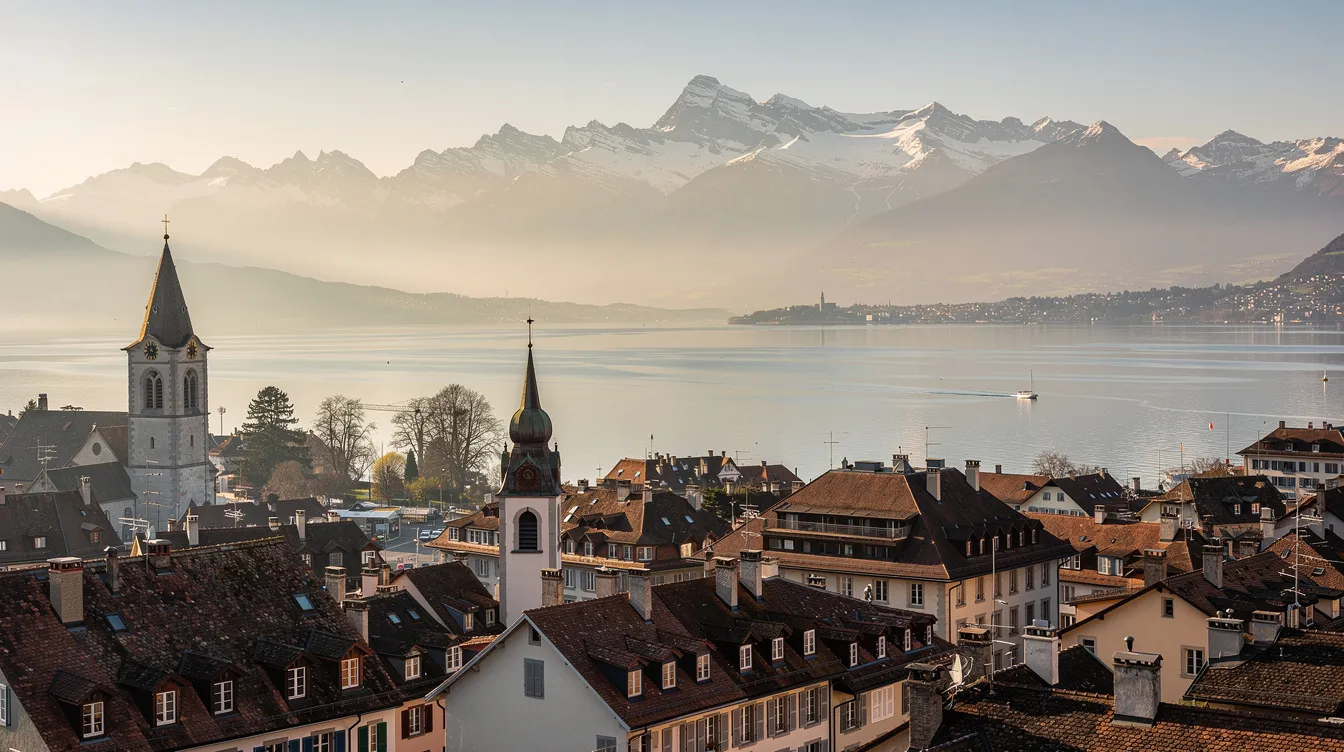
Millenium Properties, a local agency specialising in luxury residential property in Geneva, offers specialist expertise in this sector for the sale of villas, single-family houses and high-end apartments, as well as rental management.
Affordability, housing shortage and buyer behaviour
Despite high prices, demand remains sustained in major urban areas and attractive regions. Domestic demand is supported by constant population growth, but the supply of new housing is struggling to keep pace.
The situation is a cause for concern:
- Nearly 33 000 rental homes were granted building permits over twelve months
- New construction starts fell by 12%
- Stricter spatial planning laws weigh on developers' activity
- Energy performance requirements affect construction
Only 36% of the Swiss population owns a home – one of the lowest rates in Europe. A household on a median income can afford only 17% of quality apartments. Yields on investment properties in Switzerland are often between 2% and 4% net, but maintenance costs can affect a property's net return.
Since the pandemic, buyers have increasingly sought houses with outdoor space and are interested in suburban municipalities well served by public transport, where remote working offers a new quality of life.
Practical advice for buyers in French-speaking Switzerland:
- Build up your equity well in advance (minimum 20% of the price)
- Check your debt ratio with a bank simulator
- Plan for additional costs (notary, transfer taxes, renovation)
- Work with a local agency to secure your project
Outlook 2026–2027 for the Swiss and Geneva property market
Forecasts for the coming years point to a market that remains buoyant but is gradually slowing.
- Prices: continued growth at around 2–3% per year, compared with 3.5% observed in 2026
- Rents: asking rents will continue to rise by 2–3%, while rents on existing leases will react more slowly
- Rates: a broadly stable to slightly rising environment for long-term mortgages
- Supply: construction will remain below needs, keeping the market tight
In Geneva and Lausanne, international buyers' appetite for prestige properties – villas, main residences or high-end apartments continues to support prices in the most sought-after neighbourhoods. The Swiss franc exchange rate strengthens the interest of foreign investors.
How does Millenium Properties support your prestige property project in Switzerland?
Millenium Properties is a Geneva-based real estate agency specialising in high-end residential property in the French-speaking Swiss market. Our regular publications and market information help our clients make informed decisions:
- Sale and purchase of luxury villas, houses and apartments
- High-end lettings and full rental management
- Accurate property valuation, based on local market data
- Virtual tours, digital inventory reports and electronic signatures
Whether you are a Geneva owner wishing to sell a villa in 2026 or a foreign investor looking for a prestige apartment to let, we structure every step of your journey – from reading the market to completing the transaction.
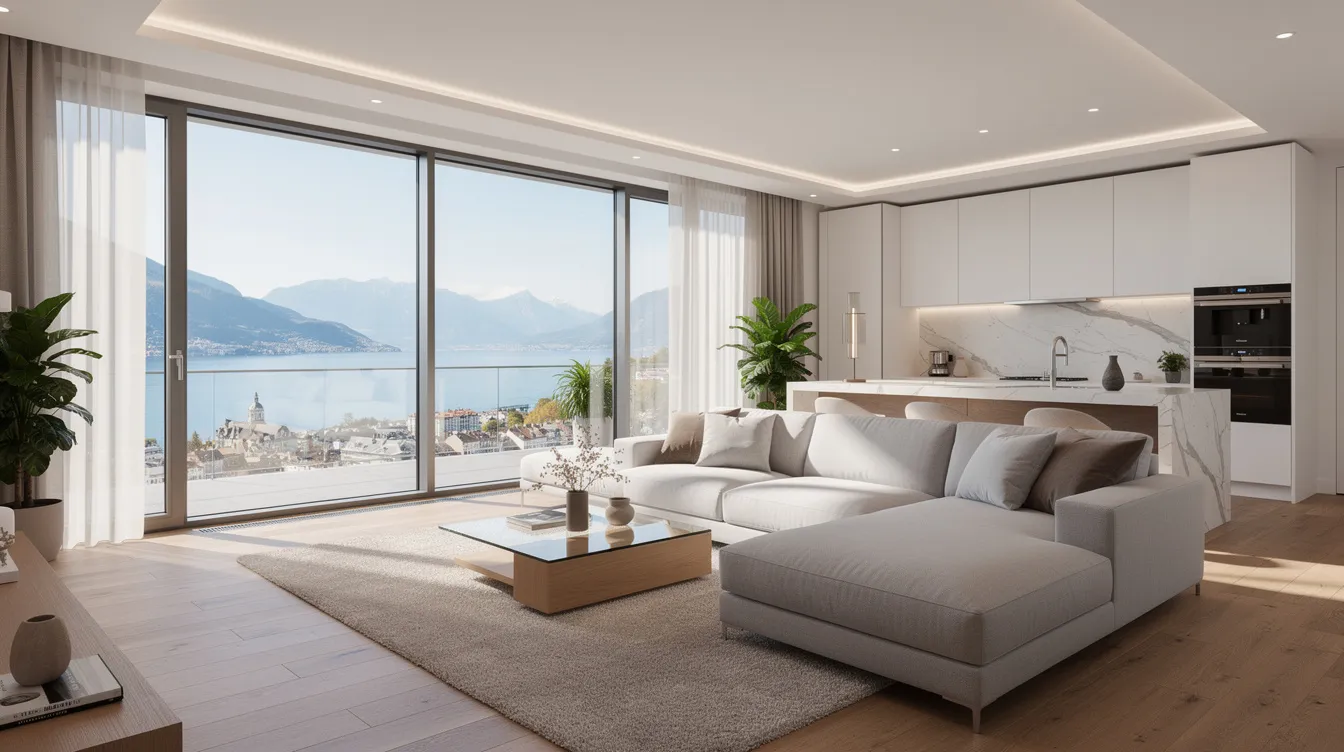
Book an appointment now to turn market trends into concrete opportunities. Request your complimentary valuation or contact our team with questions about your next investment in Geneva and the surrounding area.
Frequently asked questions
What we are asked most often
What is the current state of the Swiss property market?
The Swiss property market remains in a phase of marked resilience in 2026. Prices of owner-occupied homes rose by 3.5% year on year in the first quarter, driven by sustained demand and supply that struggles to keep up. Outstanding mortgage volume increased by 3.3% over the same period, while asking rents are rising faster (+2.2%) than rents on existing leases (+1.2%). The risk of a property bubble, measured by the UBS Swiss Real Estate Bubble Index, remains classed as "moderate" despite a clear acceleration (0.46 to 0.69 points in the first quarter of 2026). The housing shortage remains the dominant structural factor, particularly in Geneva and the Lake Geneva area, where rental pressure and a lack of new construction keep prices under pressure.
Where can I find independent mortgage brokers?
To obtain financing conditions suited to your profile, it is advisable to compare several offers rather than limiting yourself to a single bank, as rate differences can reach several tenths of a point between lenders. Millenium Properties SA works with a network of partner banks and mortgage brokers in French-speaking Switzerland, and helps its clients interpret rates, choose a mortgage model (fixed, SARON, mixed) and negotiate terms. Feel free to contact us directly to be put in touch with our trusted financial partners.
What are the Swiss property price trends according to the main platforms?
The main platforms and reference institutes (FSO, UBS, IAZI, Wüest Partner) agree on a moderate upward trend for 2026: single-family houses show +3.5% and PPE apartments +3.7% over twelve months. Forecasts anticipate a gradual slowdown in growth, at around 2 to 3% per year in the coming years, compared with 3.5% observed in 2026. Price differences per m² can, however, vary considerably from one platform to another depending on their methodology (portfolio properties, active listings, geographical scope), so it is advisable to cross-check several sources or request a personalised local valuation rather than relying on a single average displayed online.