News
Buying a chalet in Switzerland: an analysis of the best investment regions
Acquiring a chalet in Switzerland is far more than a simple property purchase. As a long-term asset, a potential source of rental income and a favoured holiday retreat, the Swiss chalet embodies a dream for many buyers, both Swiss and international. Yet this specific market follows its own codes and requires in-depth knowledge of regional, legal and financial subtleties in order to optimise your investment.
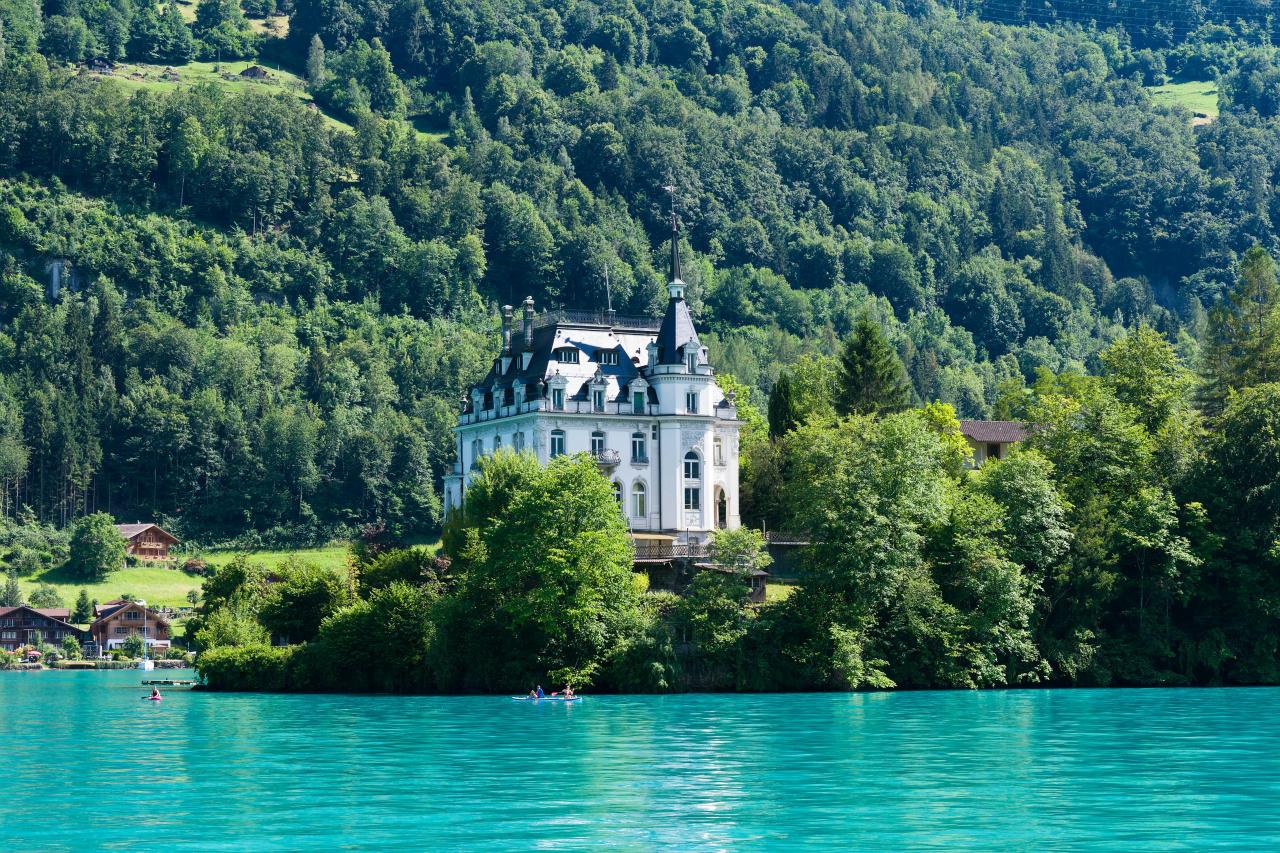
With more than 15 years of expertise in the Geneva and Swiss property market, Millenium Properties offers you a complete guide to approach your chalet purchase with confidence. Whether you are looking for a second home, a rental property or a long-term investment, this article will give you the essential keys to make the soundest choices.
The best regions to buy a chalet in Switzerland
The choice of location is undoubtedly the most decisive factor in the success of your chalet investment. Despite its modest size, Switzerland offers a surprising diversity of areas, each with its own characteristics and advantages.
Geneva and its surroundings
While the canton of Geneva first brings to mind an urban, international environment, it also contains areas suited to acquiring quality chalets, particularly on its outskirts and in neighbouring regions.
The wider Geneva area
The Grand Genève region, which extends beyond the strict cantonal borders, offers several interesting opportunities:
- Geneva Jura : The municipalities of Dardagny, Russin and Satigny offer a rural setting less than 30 minutes from the city centre, with contemporary chalets combining modernity and tradition. Average prices range between 1.5 and 2.2 million Swiss francs for quality properties.
- Nyon region : On the border of the canton of Vaud, Nyon and its surroundings (Crassier, Borex, Gingins) are a sought-after alternative for buyers wanting to be close to Geneva while benefiting from a different tax regime. Chalets there are generally offered between CHF 1.8 and 3 million depending on their standard.
- Pays de Gex : On the French side but closely tied to the Geneva economy, the Pays de Gex offers opportunities at more affordable prices (35 to 40% lower than in Switzerland) while retaining excellent access to the canton.
The advantage of proximity to Geneva
Investing in a chalet near Geneva offers several strategic advantages:
- An exceptional pool of tenants made up of expatriates and international executives
- Proximity to first-rate services, infrastructure and transport networks
- Historical stability of property prices, with average annual appreciation of 3.2% over the last 15 years
Note that chalets offered in this region often feature contemporary architecture and high energy standards, meeting the expectations of a demanding clientele attentive to environmental issues.
Attractive alpine areas
For those who favour mountain authenticity or seasonal rental investment, the alpine regions naturally form the heart of the Swiss chalet market.
French-speaking Valais
French-speaking Valais is home to several internationally renowned resorts offering an ideal setting for acquiring a chalet:
- Verbier : A benchmark of alpine luxury, Verbier has some of the highest prices in Switzerland (between CHF 3 and 15 million for a chalet), but ensures a first-rate investment with excellent liquidity and premium rental potential.
- Crans-Montana : Offering a perfect balance between alpine atmosphere and urban sophistication, Crans-Montana appeals to an international clientele. Chalets there generally sell for between CHF 2.5 and 8 million.
- Nendaz/Veysonnaz : These satellite resorts offer a more affordable alternative (CHF 1.8 to 4 million) while providing access to the same ski area as Verbier (Les 4 Vallées).
Vaud and Fribourg
For a more family-oriented environment while keeping excellent access from Geneva:
- Villars/Gryon : About 1 h 30 from Geneva, these Vaud resorts appeal through their family atmosphere and unspoilt setting. Allow between CHF 1.5 and 5 million for a traditional chalet.
- Les Diablerets : More authentic and less publicised, this resort offers purchase opportunities between CHF 1.2 and 3.5 million, with interesting development potential following recent investment in the ski area.
- Fribourg Alps : Les Paccots, Moléson and Charmey offer chalets from CHF 900’000 in an unspoilt environment, ideal for investors seeking a more accessible entry into the market.
Value drivers in alpine areas
The appeal of a mountain chalet rests on several decisive criteria:
- Orientation and view : An open panorama of the peaks can justify a premium of 15 to 30% on the purchase price
- Proximity to the slopes : Direct access to the ski lifts ( ski-in/ski-out ) is a premium feature that can add up to 25% to the property’s value
- Year-round access : Chalets accessible all year without major winter constraints retain better liquidity
- Architectural quality : Harmony between alpine tradition and contemporary comfort is today the most sought-after standard
Key criteria for a successful investment
Beyond location, several fundamental parameters will determine the relevance and profitability of your investment in a Swiss chalet.
Financial aspects
Acquiring a chalet in Switzerland is a significant financial commitment that calls for a thorough analysis of the project’s various economic components.
Optimal financing structure
Financing a chalet in Switzerland follows specific rules:
- Personal contribution : Swiss banks generally require a minimum of 25% to 35% equity, depending on the buyer’s profile and the property’s intended use (main residence, second home or investment)
- Debt ratio : The cost-to-income ratio should generally not exceed 33%, calculated using a theoretical interest rate often higher than actual market conditions (around 5% in 2025)
- Amortisation : For second homes, banks frequently require faster amortisation, with the loan reduced to 65% of the value within 15 years
According to our analyses at Millenium Properties, the optimal financing structure for an investment chalet generally comprises 30–35% equity, a fixed-rate mortgage for 50% of the amount (securing costs over the long term) and a variable-rate loan for the balance (flexibility for early repayment).
Analysis of additional costs
Acquiring a chalet generates several additional costs to include in your financial plan:
- Transaction costs : About 3–5% of the purchase price, including transfer duties (1–3.3% depending on the canton), land registry fees, notary fees and any agency fees
- Annual costs : Between 1% and 1.5% of the property’s value for routine maintenance, plus co-ownership charges where applicable
- Property taxes : Varying by canton, including property tax, residence tax and taxation of the imputed rental value (a Swiss specificity)
- Insurance : Allow about 0.1% of the property’s value for full cover (building, owner’s third-party liability)
Appreciation outlook
The Swiss chalet market has historically shown remarkable resilience, with average annual appreciation of 4.2% over the last 20 years. This performance is explained in particular by:
- The structural scarcity of supply, accentuated by legal restrictions (Lex Koller, Lex Weber)
- Switzerland’s constant appeal as a safe haven for international investors
- Exceptional construction quality ensuring greater property longevity
It should however be noted that this average performance masks significant regional and qualitative disparities, hence the importance of selecting your investment rigorously.
Rental potential
For many buyers, rental yield is an essential part of the financial equation justifying the purchase of a chalet in Switzerland.
Seasonality and occupancy rates
A chalet’s rental performance varies considerably with its location:
- Urban/suburban chalets (Geneva region): Potential occupancy rate of 80–90% over the year, with long-term leases and stable rents
- Chalets in alpine resorts : Marked seasonality, with an average annual occupancy rate of 30–45% but daily rates 3 to 4 times higher in high season
- Mid-mountain chalets : A more balanced spread across seasons with growing summer potential, for an average occupancy rate of 35–50%
Expected rental yields
Our experience at Millenium Properties allows us to establish the following gross yield ranges:
- Geneva region : 2.5% to 3.2% gross per year
- Premium resorts (Verbier, Crans-Montana): 1.8% to 2.5% gross per year
- Family resorts (Les Diablerets, Nendaz): 2.2% to 3.5% gross per year
It is important to stress that these yields, although lower than those of other property asset classes, generally come with stronger long-term capital appreciation and non-financial benefits (personal use).
Rental management and operating models
Owners have several options to optimise the rental of their chalet:
- Direct management : Maximises margins but requires availability and proximity
- Traditional estate agency : Average commission of 15–20% of rents, with a variable level of service
- Specialised platforms (such as Airbnb Premium): Commission of 3–5% plus service fees, but requires additional operational management
- Turnkey management : Full services (guest reception, cleaning, maintenance) for a commission of 25–35%
For high-end chalets, a hybrid model combining personal use at specific periods and premium rental the rest of the time often proves the most balanced solution.
Legal and administrative advice
The regulatory framework governing the purchase of a chalet in Switzerland has several specific features that can significantly affect your investment project.
Purchase regulations
Swiss property acquisition law contains several particular provisions, especially for foreign investors and second homes.
Lex Koller and foreign investors
This fundamental law governs the acquisition of property by persons residing abroad:
- EU/EFTA nationals domiciled in Switzerland are treated in the same way as Swiss citizens
- Persons domiciled abroad must obtain cantonal authorisation to acquire property
- Main residences are generally outside its scope, unlike second homes
- Each canton has authorisation quotas, with varying allocation criteria
Note that the canton of Geneva applies a particularly restrictive interpretation of the Lex Koller, making purchases by non-residents very complex except in exceptional cases.
Lex Weber and second homes
In force since 2016, this legislation limits the construction of second homes in municipalities where they already account for more than 20% of the housing stock:
- Major impact on most popular ski resorts, where the quota is far exceeded
- Increased value of existing properties, which now benefit from greater scarcity
- Tightly regulated possibilities for converting main residences into second homes
- Possible exceptions for certain structured tourist accommodation
Rural land law
For chalets located in or immediately next to agricultural zones, additional restrictions may apply, particularly regarding acquisition by persons who are not farmers.
Property taxation
Taxation is a decisive element in the economics of an investment in a Swiss chalet.
Taxation on acquisition
On purchase, several taxes apply:
- Transfer duties : Between 1% and 3.3% depending on the canton (Geneva: 3% plus additional centimes)
- Land registry fees : 0.25% to 0.4% of the property’s value
- VAT : Generally not applicable to existing properties, but may concern new chalets or certain ancillary services
Ongoing taxation for the owner
Once you are an owner, several recurring taxes must be anticipated:
- Wealth tax on property : Based on the property’s tax value (generally 60–80% of market value)
- Tax on rental income : Applicable to rents received and, as a Swiss specificity, to the imputed rental value even when the property is not actually let
- Property tax : An annual tax of between 0.1% and 0.3% of the cadastral value depending on the canton
- Residence tax : Applicable in some tourist municipalities as a flat rate or in proportion to the length of occupancy
Legitimate tax optimisation
Several strategies can be considered to optimise the tax treatment of your investment:
- Suitable ownership structure : SCI, property company (SA) or direct ownership depending on your personal situation
- Planning of works : Some renovations may be fully deductible from taxable income
- Main residence vs second home : Very different tax implications, particularly for non-residents
- Management of rental income : Optimisation by deducting actual costs rather than flat-rate amounts
At Millenium Properties, we systematically recommend consulting a specialised tax expert before any significant acquisition, as cantonal and municipal specificities can lead to major variations in overall tax treatment.
Conclusion
Acquiring a chalet in Switzerland is far more than a simple property investment. As an exceptional asset with long-term appreciation potential and a unique way of life, the Swiss chalet retains a special place in the global property landscape.
The success of such a project relies on a methodical approach that includes a thorough analysis of the location, an optimised financial structure and a full understanding of the legal and tax framework. Regional specificities, particularly between the Geneva area and the alpine regions, also call for a strategy adapted to your priorities: personal use, rental yield or protecting your wealth.
In a market characterised by structural scarcity and a complex regulatory framework, support from experienced professionals is a major asset for completing your project under the best conditions. The Millenium Properties team, with more than 15 years of expertise in the Swiss market, is at your disposal to guide you through every stage of your purchase, from precisely defining your needs to optimising your investment over the long term.
What additional costs are involved in a purchase?
Beyond the purchase price, several additional costs must be budgeted: transfer duties (1–3.3% depending on the canton), land registry fees (0.25–0.4%), notary fees (0.5–1%), any agency fees (2–3% if not included in the price), bank fees for setting up the mortgage (0.1–0.3%) and the cost of a property valuation if required by the lender. Fees for lawyers or tax advisers are generally added for complex acquisitions, particularly for non-residents. In total, these additional costs typically represent between 3% and 7% of the transaction amount, depending on the canton and the complexity of the case.
Is buying a chalet a good investment?
Acquiring a chalet in Switzerland is generally an excellent long-term investment, combining capital security, appreciation potential and non-financial benefits. Historically, the chalet market has shown greater resilience during economic downturns, with limited volatility compared with other asset classes. While the pure rental yield (2–3.5% gross) may seem modest, overall performance including capital appreciation over 10–15 years remains very attractive, with an annualised total return often above 6%. In addition, legal restrictions on new construction (Lex Weber) have strengthened the value of existing properties, creating a structural scarcity that benefits current owners. Finally, the lasting, transferable nature of this tangible asset is a further advantage in a diversified investment strategy.